
Introduction
Every successful organization has one thing in common—effective communication. Whether launching a new product, managing a crisis, engaging employees, or connecting with customers, the way a message is communicated can shape public perception and influence business success. This is why organizations rely on well-planned communication strategies to ensure the right message reaches the right audience at the right time.
A strong communication strategy is more than simply sharing information. It is a structured approach that helps organizations communicate with clarity, consistency, and purpose while building lasting relationships with their stakeholders.
What is a Communication Strategy?
A communication strategy is a well-defined plan that outlines how an organization will communicate its messages to specific audiences. It identifies the objectives, target audience, key messages, communication channels, and methods for evaluating success.
An effective strategy ensures that every communication effort aligns with the organization’s goals and brand values. Whether communicating internally with employees or externally with customers and the media, a clear strategy helps avoid confusion and strengthens trust.
Why are Communication Strategies Important?
In today’s fast-paced digital world, audiences receive information from countless sources every day. Without a clear communication strategy, messages can become inconsistent, unclear, or ineffective.
What is Communication Strategy?
A communication strategy is a well-defined plan that outlines how an organization will communicate its messages to specific audiences. It identifies the objectives, target audience, key messages, communication channels, and methods for evaluating success.
An effective strategy ensures that every communication effort aligns with the organization’s goals and brand values. Whether communicating internally with employees or externally with customers and the media, a clear strategy helps avoid confusion and strengthens trust.
Why are Communication Strategies Important?
In today’s fast-paced digital world, audiences receive information from countless sources every day. Without a clear communication strategy, messages can become inconsistent, unclear, or ineffective.
A strong communication strategy helps organizations:
- Build trust and credibility.
- Deliver consistent brand messaging.
- Strengthen relationships with stakeholders.
- Improve customer engagement.
- Support business growth and decision-making.
- Respond effectively during crises.


Organizations that communicate strategically are better positioned to earn public confidence and maintain a positive reputation.
Key Elements of an Effective Communication Strategy
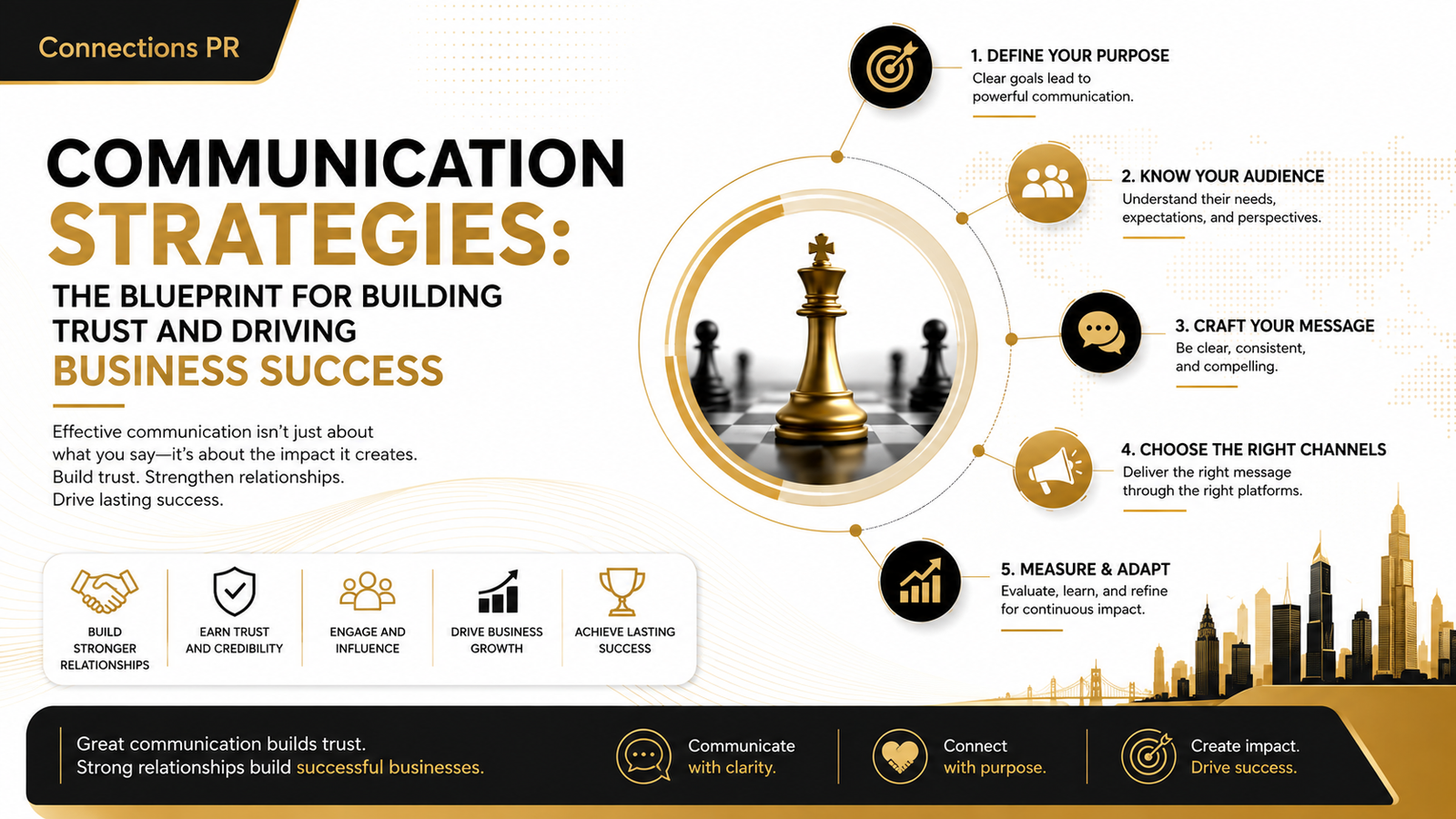
1. Define Clear Objectives
Every communication effort should have a clear purpose. Whether the goal is to increase brand awareness, launch a product, or improve customer engagement, defining objectives helps guide the entire strategy.
2. Understand the Target Audience
Successful communication begins with understanding who the audience is. Organizations should identify their audience’s needs, interests, and preferences to create messages that are relevant, meaningful, and engaging.
3. Develop Clear and Consistent Messages
Messages should be simple, accurate, and aligned with the organization’s values. Consistency across websites, social media, emails, advertisements, and public statements helps strengthen brand identity and avoid confusion.
4. Choose the Right Communication Channels
Different audiences prefer different platforms. Organizations should select appropriate channels such as websites, social media, email, press releases, blogs, or face-to-face communication to maximize the impact of their message.
5. Measure and Improve Performance
An effective communication strategy is continuously evaluated. Organizations should analyze audience engagement, feedback, and campaign performance to identify what works well and make improvements for future communication efforts.
The Role of Digital Communication
Technology has transformed how organizations communicate with their audiences. Social media, video content, blogs, podcasts, and digital newsletters allow businesses to reach people instantly and interact with them in real time.
However, digital communication also requires organizations to respond quickly, maintain transparency, and ensure consistent messaging across multiple platforms. A well-planned digital strategy helps businesses stay connected with their audiences while strengthening their online presence.
Best Practices for Successful Communication
Organizations can improve their communication strategies by:
- Setting clear communication goals.
- Understanding audience expectations.
- Keeping messages simple, honest, and consistent.
- Using the most effective communication channels.
- Listening to audience feedback and adapting accordingly.
- Regularly reviewing communication outcomes to improve future strategies.
Conclusion
Communication is at the heart of every successful organization. A well-designed communication strategy helps businesses deliver meaningful messages, build trust, and create lasting relationships with customers, employees, and other stakeholders.