
Introduction
Imagine launching a groundbreaking product or announcing a major achievement, but no one hears about it. In today’s fast-paced media landscape, simply having a great story isn’t enough—it needs to reach the right audience through the right channels. This is where Media Relations becomes essential.
Media relations is one of the most powerful pillars of Public Relations (PR). It focuses on building strong, professional relationships between organizations and journalists, editors, broadcasters, and digital media professionals. When done effectively, media relations helps organizations earn positive publicity, strengthen their reputation, and build public trust.
What is Media Relations?
Media relations is the practice of communicating with media professionals to share accurate, relevant, and newsworthy information about an organization. Unlike paid advertising, media relations aims to gain earned media coverage, where journalists choose to publish or broadcast a story because it is valuable to their audience.
This earned coverage often carries greater credibility because it comes from independent media sources rather than direct promotions.
Why is Media Relations Important?
Strong media relationships help organizations communicate their messages to a wider audience while enhancing credibility. Journalists are more likely to cover organizations they trust, making long-term relationships an invaluable asset.
Effective media relations can:
- Increase brand visibility and awareness
- Build public trust and credibility.
- Support product launches and campaigns.
- Improve crisis communication.
- Position organizations as industry experts.


Key Elements of Successful Media Relations
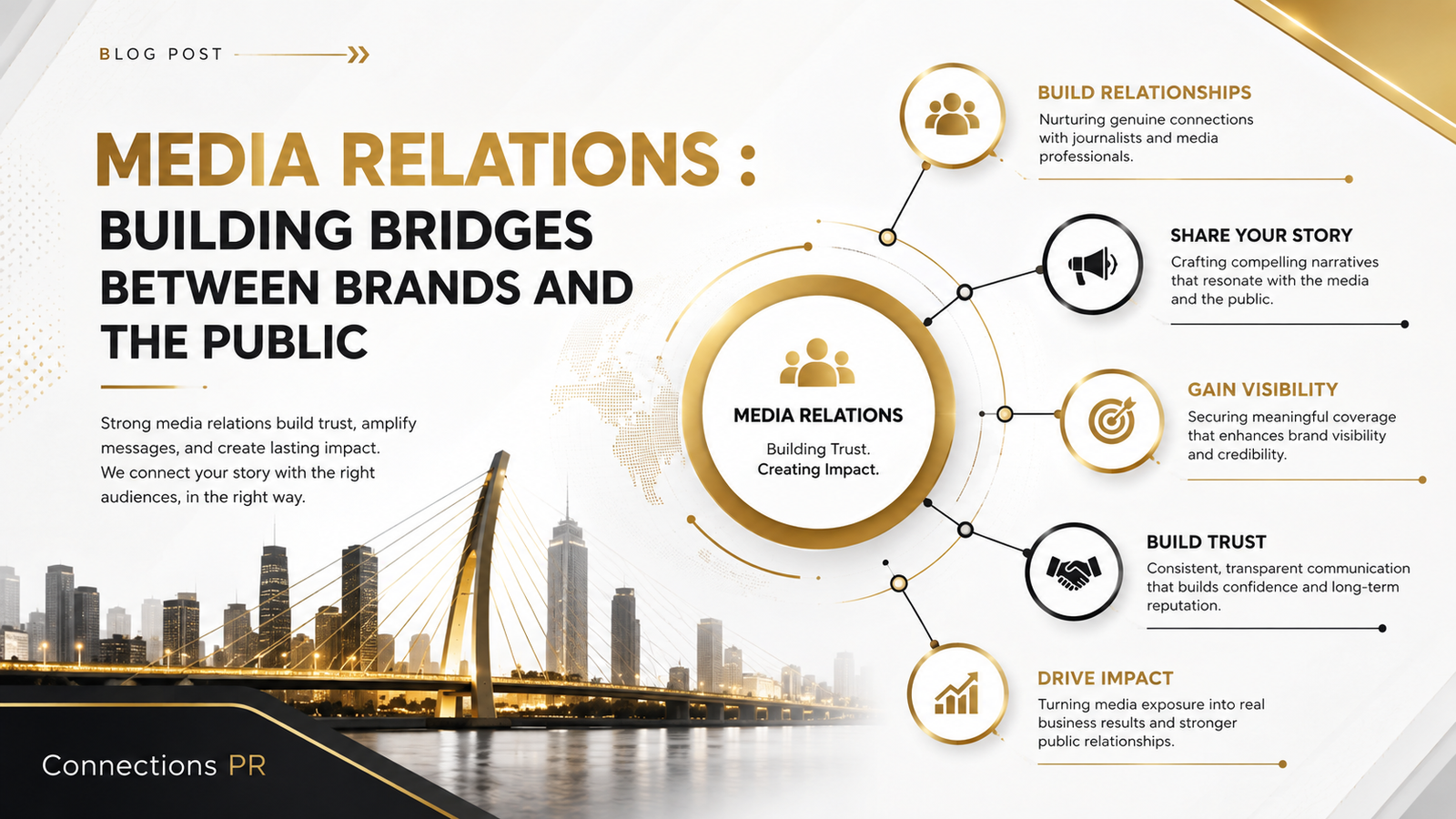
1. Build Genuine Relationships
Successful media relations begins with trust. PR professionals should develop long-term relationships with journalists by understanding their interests, respecting deadlines, and providing accurate information. A strong professional relationship benefits both the organization and the media.
2. Share Newsworthy Stories
Not every announcement deserves media attention. Journalists look for stories that are timely, relevant, unique, and beneficial to their audience. Organizations should focus on sharing meaningful updates rather than promotional content.
3. Write Effective Press Releases
A press release remains one of the most important tools in media relations. It should include a clear headline, essential facts, supporting quotes, and contact information. A well-structured press release makes it easier for journalists to understand and publish the story.
4. Be Responsive and Transparent
Media professionals often work under tight deadlines. Responding quickly to inquiries, providing accurate information, and being transparent during interviews help strengthen professional relationships and improve media coverage.
The Impact of Digital Media
The rise of online news platforms and social media has transformed media relations. Organizations now communicate not only with newspapers and television channels but also with online publications, bloggers, podcasters, and digital creators.
This shift allows businesses to reach global audiences instantly while encouraging two-way communication.
However, it also requires organizations to respond quickly, maintain consistency, and actively monitor public conversations.
Best Practices for Effective Media Relations
Organizations can improve their media relations by:
● Developing strong relationships with journalists.
● Sharing factual and newsworthy information.
● Preparing professional press releases.
● Responding promptly to media requests.
● Maintaining honesty and transparency in every interaction.
● Monitoring media coverage to understand public perception.
Conclusion
Media relations is more than simply gaining publicity—it’s about building trust through meaningful communication. Organizations that establish positive relationships with media professionals are better positioned to share their stories, manage their reputation, and connect with wider audiences.
In an era where information spreads within seconds, successful media relations requires credibility, transparency, and consistency. By focusing on authentic communication and long-term relationships, organizations can transform media coverage into one of their strongest tools for building reputation and achieving lasting success.