
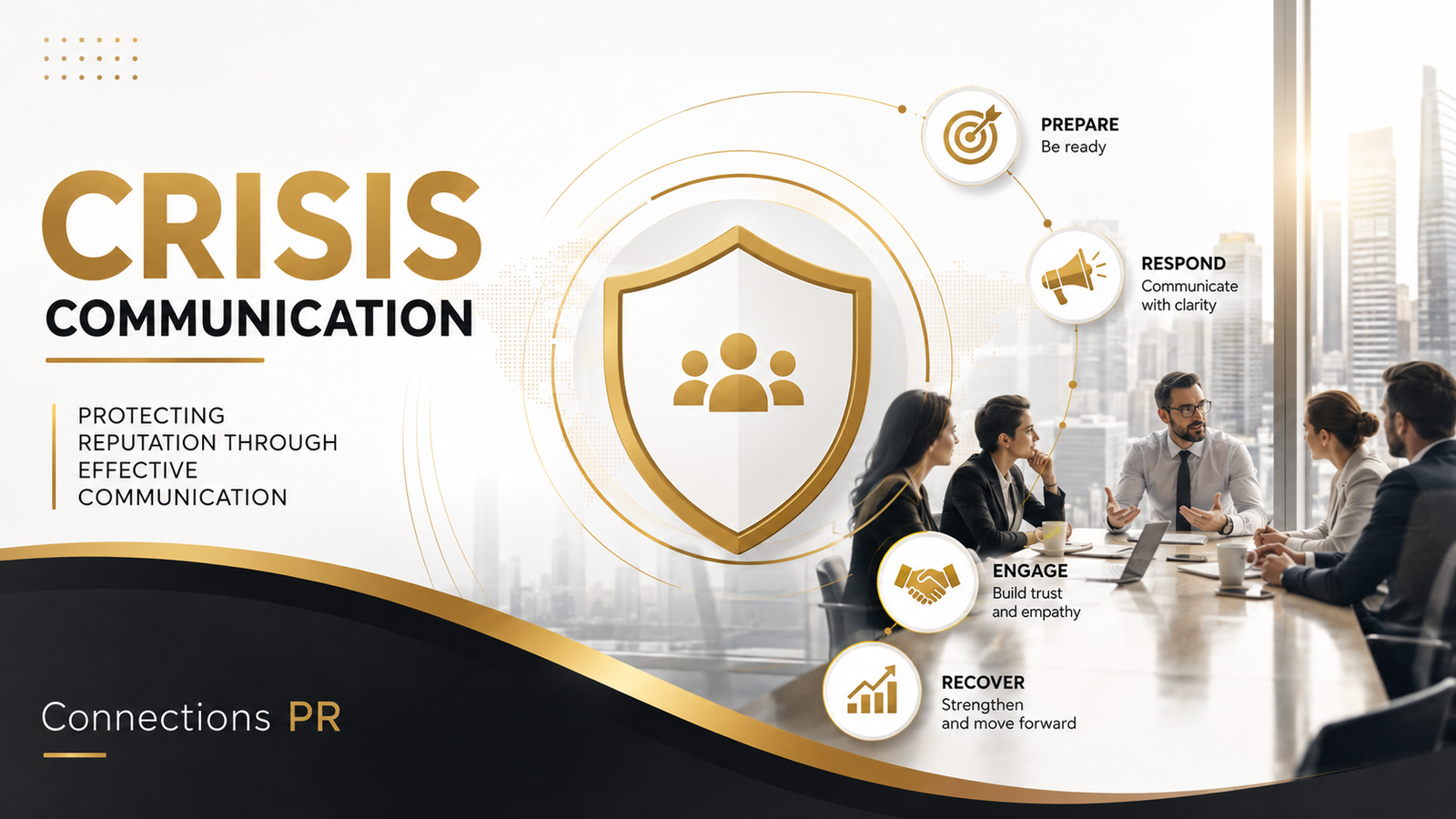
Introduction
Every organisation , no matter what its industry or size is ,may face unexpected challenges that can threaten its reputation. These challenges may include product recalls, cyber attacks, workplace incidents, negative media coverage, or social media controversies. During such critical situations , the way an organisation communicates can determine whether it regains public trust or suffers long-term damage. This is where crisis communication plays a vital role.
What is Crisis Communication?
Crisis communication is the process of planning and delivering clear, timely and accurate information During a crisis, its primary goal is to protect an organisation’s reputation, reduce confusion and maintain the trust of the customers, employees, investors and the public
An effective prices communication strategy ensures that the stakeholders receive reliable information while preventing the spread of rumours and misinformation.
Why is crisis communication important?
A crisis can quickly attract public attention, especially in today’s digital world where news spreads instantly through social media. Poor communication can damage an organisation’s credibility , while a well managed response can strengthen public confidence.
Effective crisis communication help organisations :
- Protect their reputation
- Maintain public trust
- Reduce misinformation
- Recover more quickly from challenging situations
- Support employees, and customers


Elements Of Effective Crisis Communication
- Respond Quickly
Speed is important during a crisis, delayed communication can create uncertainty and allow false information to spread. Organisations should acknowledge the situation as soon as possible, even if all the facts are not yet available.
- Be Honest and Transparent to Audience
Trust is built through honesty. Organisations should provide accurate information,admit mistakes ,when necessary and avoid hiding important facts.Transparent communication, demonstrate accountability and strengthen credibility.
3.Show Empathy
People expect organisations to care about those affected by a crisis. Messages should express concern, understanding and commitment to resolving the issues. Empathy helps maintain positive relationships with stakeholders.
- Deliver Consistent Messages
Conflicting statements from different sources can confuse the public. All official communication should present clear, consistent and factual information across websites, social media platforms and media interviews.
5.Monitor Public Response
organisations should continuously monitor media reports, online discussions ,and public feedback to understand concerns and respond appropriately. Listening to stakeholders helps improve communication throughout the crisis
The Role Of Social Media
Social media has transformed crisis communication by allowing organisations to communicate directly with the public in real time. It also enables companies to correct misinformation quickly, provide regular updates,and answer public concerns. However, because information spreads rapidly, online organisations must ensure that every message is accurate and carefully Reviewed before publication.
Best practices for crisis communication
Organisation can strengthen this crisis response by :
- Preparing a crisis communication plan in advance.
- Training spokesperson and communication teams.
- Providing regular updates as new information becomes available.
- Using clear simple language that everyone understands.
- Reviewing the crisis afterward to improve their future preparedness.
Conclusion
Crisis communication is an essential part of modern public relations. While crises are often unavoidable, the way an organisation responds can significantly influence public perception and long-term reputation. By communicating quickly ,honestly, and compassionately, organisations can minimize damage, rebuild trust ,and emerge stronger from difficult situations. A well prepared crisis communication strategy not only protects an organisation’s image but also demonstrates its commitment to transparency, responsibility ,and stakeholder care.