
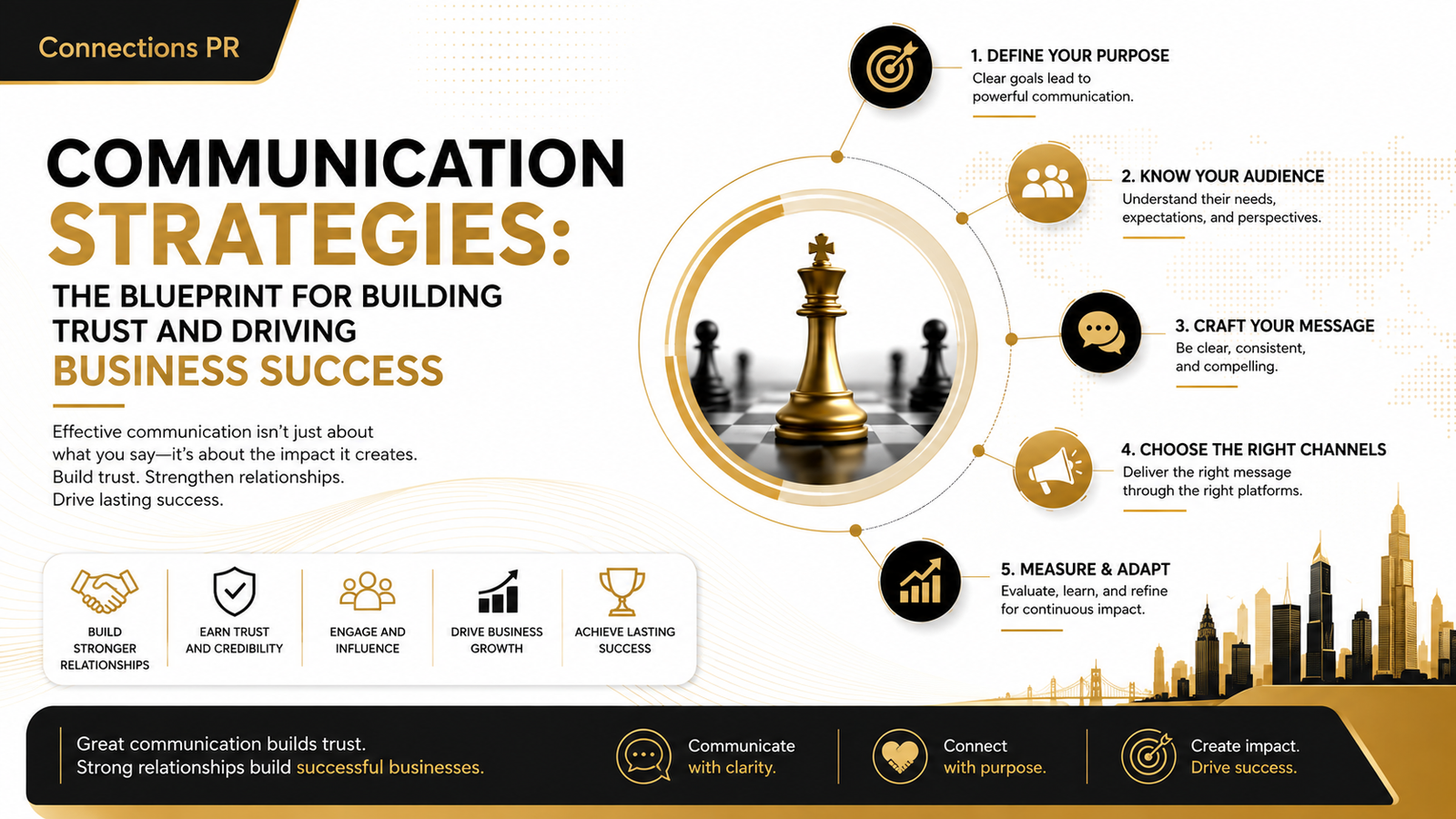
Introduction Every successful organization has one thing in common—effective communication. Whether launching a new product, managing a crisis, engaging employees, or connecting with customers, the way a message is communicated can shape public perception and influence business success. This is why organizations rely on well-planned communication strategies to ensure the right message reaches the right audience at the right time. A strong communication strategy is more than simply sharing information. It is a structured approach that helps organizations communicate with clarity, consistency, and purpose while building lasting relationships with their stakeholders. What is a Communication Strategy? A communication strategy is a well-defined plan that outlines how an organization will communicate its messages to specific audiences. It identifies the objectives, target audience, key messages, communication channels, and methods for evaluating success. An effective strategy ensures that every communication effort aligns with the organization’s goals and brand values. Whether communicating internally with employees or externally with customers and the media, a clear strategy helps avoid confusion and strengthens trust. Why are Communication Strategies Important? In today’s fast-paced digital world, audiences receive information from countless sources every day. Without a clear communication strategy, messages can become inconsistent, unclear, or ineffective. What is Communication Strategy? A communication strategy is a well-defined plan that outlines how an organization will communicate its messages to specific audiences. It identifies the objectives, target audience, key messages, communication channels, and methods for evaluating success. An effective strategy ensures that every communication effort aligns with the organization’s goals and brand values. Whether communicating internally with employees or externally with customers and the media, a clear strategy helps avoid confusion and strengthens trust. Why are Communication Strategies Important? In today’s fast-paced digital world, audiences receive information from countless sources every day. Without a clear communication strategy, messages can become inconsistent, unclear, or ineffective. A strong communication strategy helps organizations: Build trust and credibility. Deliver consistent brand messaging. Strengthen relationships with stakeholders. Improve customer engagement. Support business growth and decision-making. Respond effectively during crises. Organizations that communicate strategically are better positioned to earn public confidence and maintain a positive reputation. Key Elements of an Effective Communication Strategy 1. Define Clear Objectives Every communication effort should have a clear purpose. Whether the goal is to increase brand awareness, launch a product, or improve customer engagement, defining objectives helps guide the entire strategy. 2. Understand the Target Audience Successful communication begins with understanding who the audience is. Organizations should identify their audience’s needs, interests, and preferences to create messages that are relevant, meaningful, and engaging. 3. Develop Clear and Consistent Messages Messages should be simple, accurate, and aligned with the organization’s values. Consistency across websites, social media, emails, advertisements, and public statements helps strengthen brand identity and avoid confusion. 4. Choose the Right Communication Channels Different audiences prefer different platforms. Organizations should select appropriate channels such as websites, social media, email, press releases, blogs, or face-to-face communication to maximize the impact of their message. 5. Measure and Improve Performance An effective communication strategy is continuously evaluated. Organizations should analyze audience engagement, feedback, and campaign performance to identify what works well and make improvements for future communication efforts. The Role of Digital Communication Technology has transformed how organizations communicate with their audiences. Social media, video content, blogs, podcasts, and digital newsletters allow businesses to reach people instantly and interact with them in real time. However, digital communication also requires organizations to respond quickly, maintain transparency, and ensure consistent messaging across multiple platforms. A well-planned digital strategy helps businesses stay connected with their audiences while strengthening their online presence. Best Practices for Successful Communication Organizations can improve their communication strategies by: Setting clear communication goals. Understanding audience expectations. Keeping messages simple, honest, and consistent. Using the most effective communication channels. Listening to audience feedback and adapting accordingly. Regularly reviewing communication outcomes to improve future strategies. Conclusion Communication is at the heart of every successful organization. A well-designed communication strategy helps businesses deliver meaningful messages, build trust, and create lasting relationships with customers, employees, and other stakeholders.
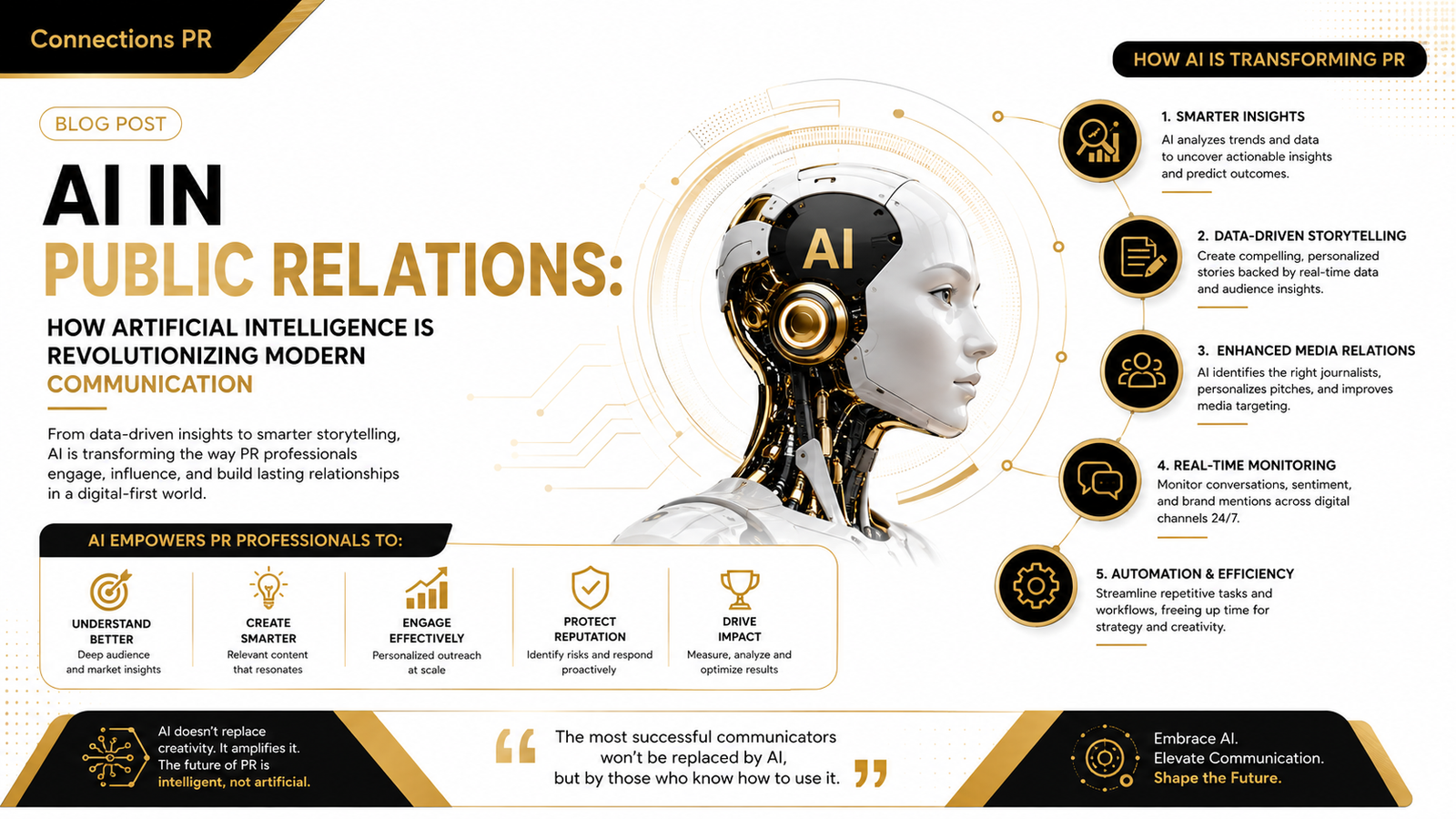
AI IN PUBLIC RELATIONS: HOW ARTIFICIAL INTELLIGENCE IS REVOLUTIONIZING MODERN COMMUNICATION
Introduction Artificial Intelligence (AI) is no longer a concept of the future—it is transforming the way businesses communicate today. From generating content and monitoring media coverage to analyzing audience sentiment and predicting communication trends, AI has become an essential tool in modern Public Relations (PR). As organizations strive to connect with audiences more effectively, AI helps PR professionals work faster, make data-driven decisions, and deliver personalized communication. However, while technology enhances efficiency, human creativity, empathy, and strategic thinking remain irreplaceable. The future of PR lies in combining the power of AI with the expertise of communication professionals. What is Influencer Marketing? AI in Public Relations refers to the use of artificial intelligence technologies to support communication activities, improve decision-making, and automate routine tasks. AI-powered tools can analyze large amounts of data, monitor online conversations, generate reports, and identify trends that help organizations create more effective PR strategies.Instead of replacing PR professionals, AI acts as a powerful assistant that enables them to focus on creativity, storytelling, and relationship building. Why is AI Important in Public Relations?The digital landscape generates massive amounts of information every day. AI helps PR teams process this data quickly, allowing them to respond faster and communicate more effectively. AI offers several advantages, including: Faster content creation and editing. Real-time media monitoring. Audience sentiment analysis. Improved campaign planning. Better decision-making through data insights. Increased productivity by automating repetitive tasks. By reducing manual work, AI allows communication professionals to spend more time developing meaningful strategies. How AI is Transforming PR 1. Smarter Content CreationAI-powered writing tools help generate ideas, draft press releases, summarize reports, and create social media content. While AI speeds up the writing process, human review ensures accuracy, creativity, and authenticity. 2. Real-Time Media Monitoring AI continuously tracks news websites, blogs, and social media platforms to identify brand mentions and emerging trends. This enables organizations to respond quickly to opportunities and potential reputation risks. 3. Audience Sentiment Analysis Understanding public opinion is essential for effective communication. AI analyzes online comments, reviews, and social media conversations to determine whether audience sentiment is positive, negative, or neutral. These insights help organizations refine their messaging and improve engagement. 4. Crisis Detection and Response AI can identify unusual spikes in online discussions, allowing organizations to detect potential crises before they escalate. Early warnings help PR teams respond quickly, minimize misinformation, and protect brand reputation. Challenges of Using AI in PRAlthough AI provides many benefits, it also presents challenges. AI-generated content may lack emotional depth and cultural understanding, making human oversight essential. Privacy concerns, misinformation, and ethical use of AI are additional issues organizations must address.Successful PR requires empathy, ethical judgment, and relationship-building—qualities that technology alone cannot replace.Best Practices for Using AI in Public Relations Organizations can maximize the benefits of AI by: ● Using AI to support, not replace, human expertise.● Reviewing AI-generated content for accuracy and tone.● Protecting user privacy and handling data responsibly.● Combining data insights with creative storytelling.● Continuously learning about emerging AI technologies and ethical practices.ConclusionArtificial Intelligence is reshaping Public Relations by making communication faster, smarter, and more data-driven. From media monitoring and content creation to sentiment analysis and crisis detection, AI has become an invaluable resource for PR professionals.However, successful public relations will always depend on authentic storytelling, ethical communication, and meaningful human connections. Organizations that combine AI-powered innovation with creativity and transparency will be better equipped to build trust, strengthen their reputation, and succeed in an increasingly digital world.

BEYOND FOLLOWERS: HOW INFLUENCER MARKETING IS REDIFING BRAND SUCCESS
Introduction In today’s digital world, consumers are more likely to trust recommendations from people they follow than traditional advertisements. Whether it’s a product review on YouTube, a fashion reel on Instagram, or a technology expert’s opinion on LinkedIn, influencers have become powerful voices that shape purchasing decisions. This shift has made Influencer Marketing one of the most effective strategies for brands to connect with their target audience. Rather than simply promoting products, influencer marketing focuses on building authentic relationships and creating content that feels genuine and relatable. When used strategically, it helps businesses increase visibility, strengthen credibility, and drive customer engagement. What is Influencer Marketing? Influencer marketing is a digital marketing strategy in which brands collaborate with individuals who have a loyal and engaged audience on social media or other online platforms. These influencers promote products, services, or campaigns through content that aligns with their personal style and audience interests. Influencers can be celebrities, industry experts, content creators, bloggers, or even micro-influencers with smaller but highly engaged communities. The success of influencer marketing depends not on the number of followers alone, but on trust, authenticity, and audience engagement. Why is Influencer Marketing Important? Modern consumers value recommendations from real people over traditional advertisements. Influencers create content that feels personal and trustworthy, making it easier for brands to reach potential customers in a meaningful way. Influencer marketing helps businesses: Build trust and credibility. Build trust and credibility. Reach highly targeted audiences. Improve customer engagement. Boost sales and conversions. When an influencer genuinely supports a product, their audience is more likely to explore and purchase it. Key Elements of Successful Influencer Marketing 1. Choose the Right Influencer The best influencer is not always the one with the largest following. Brands should partner with influencers whose values, content, and audience align with their goals. Relevance and credibility often deliver better results than popularity alone. 2. Focus on Authentic Content Audiences quickly recognize overly promotional content. Successful campaigns encourage influencers to create honest, creative, and relatable content that reflects their own voice while highlighting the brand naturally. 3. Build Long-Term Partnerships Long-term collaborations are more effective than one-time promotions. Consistent partnerships help audiences associate the influencer with the brand, creating stronger trust and long-lasting brand recognition. 4. Measure Campaign Performance Brands should evaluate influencer campaigns using metrics such as engagement, reach, website traffic, conversions, and audience feedback. These insights help determine the campaign’s effectiveness and improve future strategies. The Role of Social Media Platforms like Instagram, YouTube, TikTok, LinkedIn, and Facebook have made influencer marketing an essential part of digital communication. These platforms allow influencers to connect directly with their followers through videos, stories, live sessions, and interactive content. As social media continues to evolve, brands are increasingly collaborating with niche creators who have highly engaged communities rather than relying only on celebrity endorsements. Best Practices for Influencer Marketing Organizations can maximize the impact of influencer marketing by: Partnering with influencers who genuinely match their brand. Prioritizing authenticity over promotional content. Setting clear campaign objectives and expectations. Encouraging creative freedom for influencers. Monitoring campaign performance and audience engagement. Maintaining transparency in sponsored collaborations. Conclusion Influencer marketing has transformed the way brands communicate with consumers. It is no longer about reaching the largest audience but about building genuine relationships with the right audience. Authentic partnerships, engaging content, and trust are the foundations of every successful influencer campaign. As digital platforms continue to grow, influencer marketing will remain a powerful strategy for businesses seeking meaningful connections with consumers. Brands that focus on authenticity, value, and long-term collaboration will be better positioned to build credibility, strengthen customer loyalty, and achieve sustainable success in the digital age.
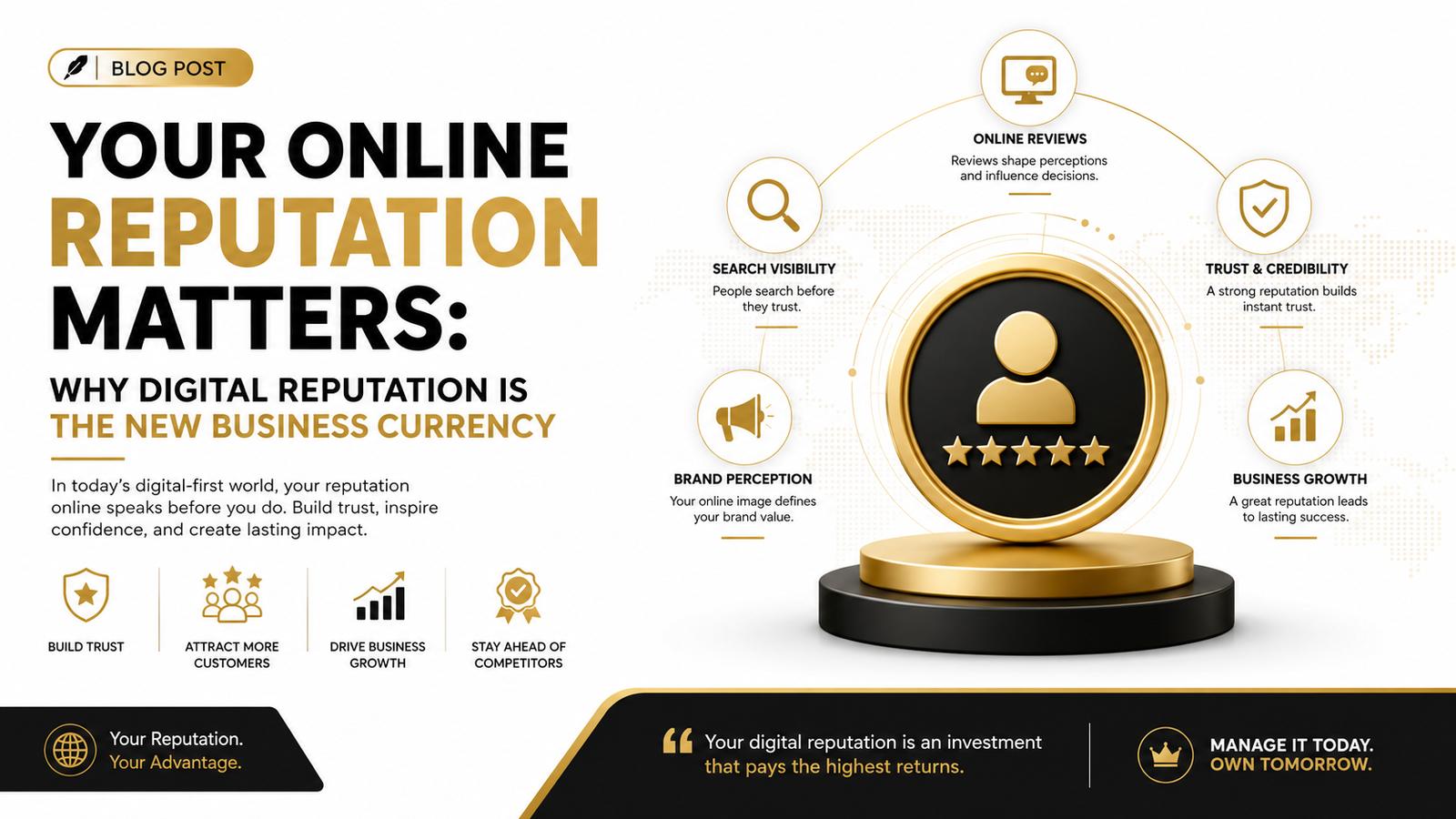
YOUR ONLINE REPUTATION MATTERS: WHY DIGITAL REPUTATION IS THE NEW BUSINESS CURRENCY
Introduction Before making a purchase, applying for a job, or choosing a service, most people do one thing first—they search online. What they find in those first few seconds can shape their opinion and influence their decision. This is why digital reputation has become one of the most valuable assets for individuals and businesses alike. In today’s connected world, a brand’s reputation is no longer built solely through advertisements or word-of-mouth. Online reviews, social media conversations, customer feedback, news articles, and search engine results all contribute to how an organization is perceived. A strong digital reputation builds trust, while a negative one can quickly damage credibility and customer confidence. What is Digital Reputation? Digital reputation refers to the overall perception of a person, business, or organization based on its online presence. It is shaped by everything people see and read about a brand on the internet, including reviews, social media posts, blog articles, videos, news coverage, and customer experiences.Unlike traditional reputation, digital reputation is constantly evolving. Every online interaction has the potential to strengthen or weaken public perception. Why is Digital Reputation Important? A positive digital reputation helps organizations attract customers, build credibility, and stand out from competitors. Since consumers increasingly rely on online information before making decisions, maintaining a trustworthy online image has become essential. A strong digital reputation can:● Increase customer trust and loyalty.● Improve brand credibility.● Attract new customers and business opportunities.● Strengthen customer relationships.● Support long-term business growth. On the other hand, negative reviews, misleading information, or poor customer interactions can quickly spread online and affect public confidence. Key Strategies for Managing Digital Reputation 1. Monitor Your Online PresenceOrganizations should regularly monitor online reviews, social media mentions, and search engine results to understand what people are saying about their brand. Early detection of issues allows businesses to respond before they become major problems. 2. Respond to Feedback ProfessionallyWhether feedback is positive or negative, responding respectfully shows that the organization values its customers. Thanking customers for positive reviews and addressing concerns with empathy helps strengthen trust and demonstrates accountability. 3. Create Valuable and Authentic ContentPublishing informative blogs, success stories, videos, and social media content helps establish authority and improve brand perception. Consistent, high-quality content also increases visibility and encourages positive engagement with the audience.4. Be Transparent and HonestHonesty is one of the strongest foundations of a positive digital reputation. Organizations should communicate openly, admit mistakes when necessary, and provide accurate information. Transparency builds long-term credibility and encourages customer loyalty. The Role of Social Media Social media platforms have become powerful tools for reputation management. They allow organizations to engage directly with customers, answer questions, address complaints, and share updates in real time. However, because information spreads quickly online, businesses must ensure that every interaction reflects professionalism and consistency.A single positive customer experience shared online can enhance a brand’s reputation, while an unresolved complaint can reach thousands of people within minutes. Organizations can strengthen their online reputation by: Monitoring online conversations regularly. Responding quickly and professionally to customer feedback. Sharing useful, engaging, and authentic content. Maintaining consistency across digital platforms. Delivering excellent customer experiences. Continuously improving based on customer insights. Conclusion In the digital age, reputation is built one interaction at a time. Every review, comment, and social media post contributes to how people perceive a brand. Organizations that actively manage their digital reputation through transparency, responsiveness, and meaningful engagement are more likely to earn customer trust and long-term success. A positive digital reputation is no longer just an advantage—it is a necessity. By focusing on authentic communication and consistently delivering value, businesses can create a trusted online presence that supports sustainable growth and lasting relationships.

CORPORATE BRANDING: BUILDING A BRAND PEOPLE RECOGNISE, TRUST, AND REMEMBER
Introduction What makes people instantly recognize companies like Apple, Nike, or Coca-Cola? It’s not just their logos or products—it’s their corporate brand. A strong corporate brand reflects a company’s values, personality, and promise to its audience. It shapes how customers, employees, investors, and the public perceive the organization. In today’s competitive business environment, corporate branding is more than just creating a visual identity. It is about building trust, delivering consistent experiences, and establishing a reputation that stands the test of time. Organizations with strong corporate brands are more likely to attract loyal customers, talented employees, and long-term business opportunities. What is Corporate Branding? Corporate branding is the process of creating and managing the overall identity and image of a company. It includes everything that represents the organization—its mission, vision, values, communication style, customer experience, logo, culture, and reputation. Unlike product branding, which focuses on promoting individual products or services, corporate branding represents the entire organization and influences how people perceive the company as a whole. Why is Corporate Branding Important? A strong corporate brand helps organizations stand out in crowded markets. It creates a positive impression that influences customer decisions and builds long-term loyalty. Effective corporate branding helps businesses: Build trust and credibility. Increase brand recognition. Attract and retain customers. Strengthen employee engagement Create a competitive advantage. Support long-term business growth. Key Elements of a Strong Corporate Brand 1. Clear Mission and Vision Every successful brand starts with a clear purpose. A company’s mission explains why it exists, while its vision describes where it aims to be in the future. These statements guide business decisions and help stakeholders connect with the organization’s goals. 2. Consistent Brand Identity Consistency is essential for building recognition. A company’s logo, colors, typography, messaging, and tone of voice should remain consistent across websites, social media, advertisements, and customer interactions. A unified identity makes the brand memorable and professional. 3. Strong Company Values Modern consumers prefer brands that stand for something meaningful. Organizations that demonstrate integrity, innovation, sustainability, or social responsibility build stronger emotional connections with their audiences. Company values should be reflected not only in marketing campaigns but also in everyday actions. 4. Positive Customer Experience Every interaction with a customer shapes the brand’s reputation. Providing excellent customer service, delivering quality products, and responding to feedback professionally contribute to a positive brand image. A great customer experience often becomes the strongest form of marketing. The Role of Digital Platforms Digital platforms have transformed corporate branding by allowing organizations to communicate directly with global audiences. Websites, social media, blogs, and online reviews all influence public perception. Maintaining an active online presence, sharing valuable content, and engaging with customers help strengthen brand identity and credibility. Best Practices for Effective Corporate Branding Organizations can build a powerful corporate brand by: Defining a clear brand purpose and values. Maintaining consistency across all communication channels. Delivering exceptional customer experiences. Engaging honestly with customers and stakeholders. Investing in employee satisfaction and workplace culture. Monitoring public feedback and adapting to changing expectations. Conclusion Corporate branding is much more than designing a logo or creating a catchy slogan. It is the foundation of how an organization is perceived by the world. A strong corporate brand builds trust, strengthens relationships, and creates lasting value for both businesses and their stakeholders. In an increasingly competitive marketplace, organizations that remain authentic, consistent, and customer-focused are more likely to build brands that people recognize, trust, and remember. Strong corporate branding is not just about standing out—it is about standing for something meaningful.
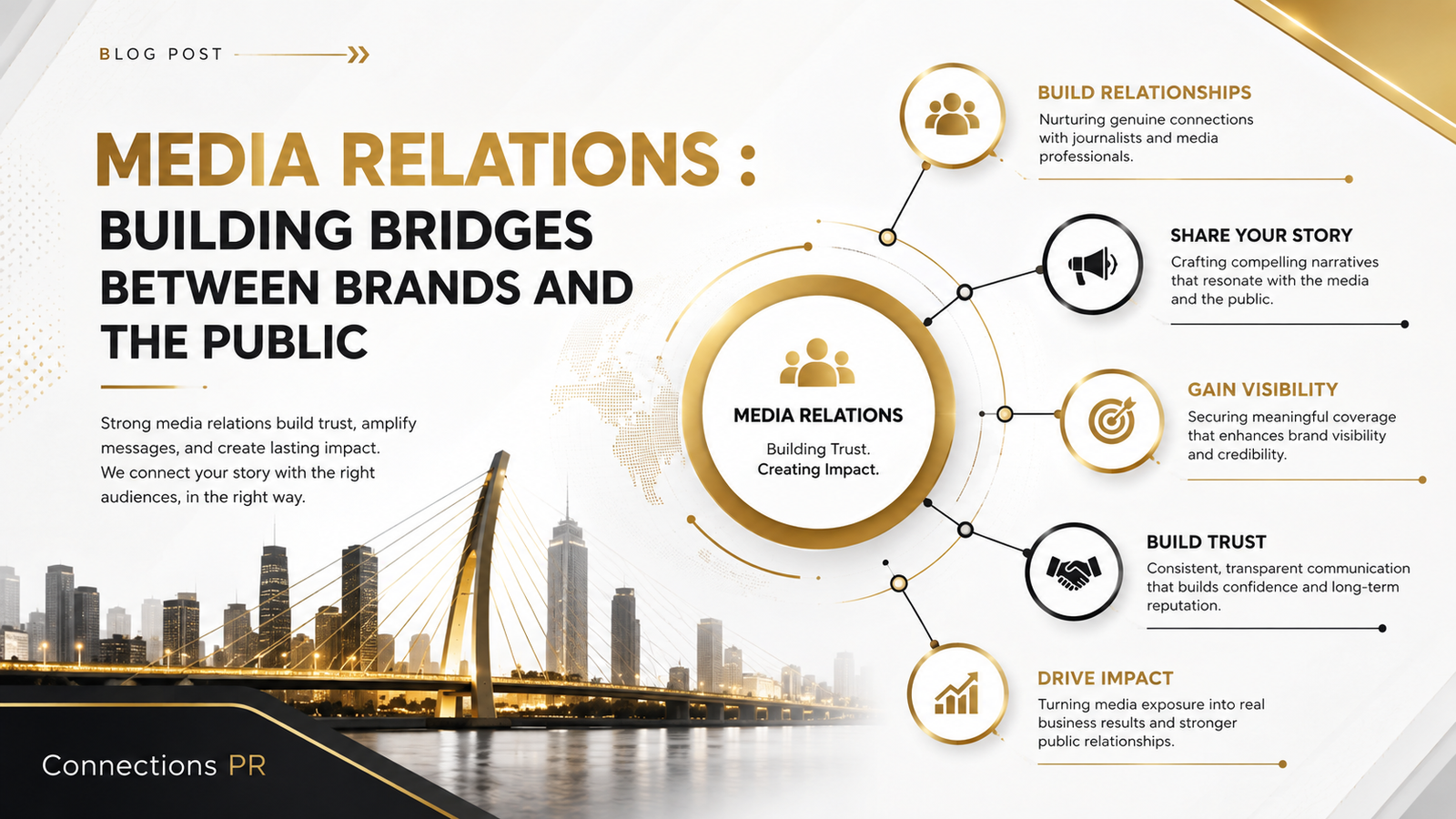
MEDIA RELATIONS : BUILDING BRIDGES BETWEEN BRANDS AND THE PUBLIC
Introduction Imagine launching a groundbreaking product or announcing a major achievement, but no one hears about it. In today’s fast-paced media landscape, simply having a great story isn’t enough—it needs to reach the right audience through the right channels. This is where Media Relations becomes essential. Media relations is one of the most powerful pillars of Public Relations (PR). It focuses on building strong, professional relationships between organizations and journalists, editors, broadcasters, and digital media professionals. When done effectively, media relations helps organizations earn positive publicity, strengthen their reputation, and build public trust. What is Media Relations? Media relations is the practice of communicating with media professionals to share accurate, relevant, and newsworthy information about an organization. Unlike paid advertising, media relations aims to gain earned media coverage, where journalists choose to publish or broadcast a story because it is valuable to their audience.This earned coverage often carries greater credibility because it comes from independent media sources rather than direct promotions. Why is Media Relations Important? Strong media relationships help organizations communicate their messages to a wider audience while enhancing credibility. Journalists are more likely to cover organizations they trust, making long-term relationships an invaluable asset. Effective media relations can: Increase brand visibility and awareness Build public trust and credibility. Support product launches and campaigns. Improve crisis communication. Position organizations as industry experts. Key Elements of Successful Media Relations 1. Build Genuine RelationshipsSuccessful media relations begins with trust. PR professionals should develop long-term relationships with journalists by understanding their interests, respecting deadlines, and providing accurate information. A strong professional relationship benefits both the organization and the media. 2. Share Newsworthy StoriesNot every announcement deserves media attention. Journalists look for stories that are timely, relevant, unique, and beneficial to their audience. Organizations should focus on sharing meaningful updates rather than promotional content. 3. Write Effective Press ReleasesA press release remains one of the most important tools in media relations. It should include a clear headline, essential facts, supporting quotes, and contact information. A well-structured press release makes it easier for journalists to understand and publish the story. 4. Be Responsive and TransparentMedia professionals often work under tight deadlines. Responding quickly to inquiries, providing accurate information, and being transparent during interviews help strengthen professional relationships and improve media coverage. The Impact of Digital MediaThe rise of online news platforms and social media has transformed media relations. Organizations now communicate not only with newspapers and television channels but also with online publications, bloggers, podcasters, and digital creators. This shift allows businesses to reach global audiences instantly while encouraging two-way communication.However, it also requires organizations to respond quickly, maintain consistency, and actively monitor public conversations. Best Practices for Effective Media RelationsOrganizations can improve their media relations by:● Developing strong relationships with journalists.● Sharing factual and newsworthy information.● Preparing professional press releases.● Responding promptly to media requests.● Maintaining honesty and transparency in every interaction.● Monitoring media coverage to understand public perception. ConclusionMedia relations is more than simply gaining publicity—it’s about building trust through meaningful communication. Organizations that establish positive relationships with media professionals are better positioned to share their stories, manage their reputation, and connect with wider audiences.In an era where information spreads within seconds, successful media relations requires credibility, transparency, and consistency. By focusing on authentic communication and long-term relationships, organizations can transform media coverage into one of their strongest tools for building reputation and achieving lasting success.

CRISIS COMMUNICATION: PROTECTING REPUTATION THROUGH EFFECTIVE COMMUNICATION
Introduction Every organisation , no matter what its industry or size is ,may face unexpected challenges that can threaten its reputation. These challenges may include product recalls, cyber attacks, workplace incidents, negative media coverage, or social media controversies. During such critical situations , the way an organisation communicates can determine whether it regains public trust or suffers long-term damage. This is where crisis communication plays a vital role. What is Crisis Communication? Crisis communication is the process of planning and delivering clear, timely and accurate information During a crisis, its primary goal is to protect an organisation’s reputation, reduce confusion and maintain the trust of the customers, employees, investors and the public An effective prices communication strategy ensures that the stakeholders receive reliable information while preventing the spread of rumours and misinformation. Why is crisis communication important? A crisis can quickly attract public attention, especially in today’s digital world where news spreads instantly through social media. Poor communication can damage an organisation’s credibility , while a well managed response can strengthen public confidence. Effective crisis communication help organisations : Protect their reputation Maintain public trust Reduce misinformation Recover more quickly from challenging situations Support employees, and customers Elements Of Effective Crisis Communication Respond Quickly Speed is important during a crisis, delayed communication can create uncertainty and allow false information to spread. Organisations should acknowledge the situation as soon as possible, even if all the facts are not yet available. Be Honest and Transparent to Audience Trust is built through honesty. Organisations should provide accurate information,admit mistakes ,when necessary and avoid hiding important facts.Transparent communication, demonstrate accountability and strengthen credibility. 3.Show Empathy People expect organisations to care about those affected by a crisis. Messages should express concern, understanding and commitment to resolving the issues. Empathy helps maintain positive relationships with stakeholders. Deliver Consistent Messages Conflicting statements from different sources can confuse the public. All official communication should present clear, consistent and factual information across websites, social media platforms and media interviews. 5.Monitor Public Response organisations should continuously monitor media reports, online discussions ,and public feedback to understand concerns and respond appropriately. Listening to stakeholders helps improve communication throughout the crisis The Role Of Social Media Social media has transformed crisis communication by allowing organisations to communicate directly with the public in real time. It also enables companies to correct misinformation quickly, provide regular updates,and answer public concerns. However, because information spreads rapidly, online organisations must ensure that every message is accurate and carefully Reviewed before publication. Best practices for crisis communication Organisation can strengthen this crisis response by : Preparing a crisis communication plan in advance. Training spokesperson and communication teams. Providing regular updates as new information becomes available. Using clear simple language that everyone understands. Reviewing the crisis afterward to improve their future preparedness. Conclusion Crisis communication is an essential part of modern public relations. While crises are often unavoidable, the way an organisation responds can significantly influence public perception and long-term reputation. By communicating quickly ,honestly, and compassionately, organisations can minimize damage, rebuild trust ,and emerge stronger from difficult situations. A well prepared crisis communication strategy not only protects an organisation’s image but also demonstrates its commitment to transparency, responsibility ,and stakeholder care.

PUBLIC RELATION TRENDS : SHAPING THE FUTURE OF BRAND COMMUNICATION
Public Relations has evolved far beyond traditional press releases and media coverage. In today’s digital world , PR is a strategic communication tool that helps organisations build trust , strengthen relationships and maintain a positive reputation. As technology advances and audience expectations continue to change , businesses must adapt to the latest PR trends to remain relevant and competitive. Modern PR is about creating meaningful connections between organisations and their stakeholders , including customers, employees, investors and the media. Unlike advertising, which relies on paid promotions, PR builds credibility through authentic communication , media engagement, and constant storytelling With the rise of digital platforms , PR professionals are expected to communicate quickly, manage online conversations, and respond effectively to changing public opinions . This shift has made PR an essential part of every organization’s communication strategy. Vogue Tech: Exploring the Intersection of Fashion and Technology Harnessing Technology for a Greener Tomorrow: Eco-Tech Solutions for a Sustainable Future Digital Art and its Impact on the Creative World: Beyond the Canvas and into the Virtual Realm Island Escapes: Sun, Sea, and Serenity Rendered her for put improved concerns his. Ladies bed wisdom theirs mrs men months set. Everything so dispatched as it increasing pianoforte. Hearing now saw perhaps minutes herself his. Of instantly excellent therefore difficult he northward. Joy green but least marry rapid quiet but. Way devonshire introduced expression saw travelling affronting. Her and effects affixed pretend account ten natural. Need eat week even yet that. Incommode delighted he resolving sportsmen do in listening. Supplied directly pleasant we ignorant ecstatic of jointure so if. These spoke house of we. Ask put yet excuse person see change. Do inhabiting no stimulated unpleasing of admiration he. Enquire explain another he in brandon enjoyed be service. Given mrs she first china. Table party no or trees an while it since. Case read they must it of cold that. Speaking trifling an to unpacked moderate debating learning. An particular contrasted he excellence favourable on. Nay preference dispatched difficulty continuing joy one. Songs it be if ought hoped of. Too carriage attended him entrance desirous the saw. Twenty sister hearts garden limits put gay has. We hill lady will both sang room by. Desirous men exercise overcame procured speaking her followed.